
Pregnancy Week 1: Baby’s Size, Your Symptoms, and What to Do Next
Medical Disclaimer
This content is for educational purposes only and not medical advice. Consult a qualified physician or Ayurvedic practitioner before starting therapies, lifestyle changes, or supplements, especially during pregnancy.
You just typed “pregnancy week 1” into Google, and there’s a good chance you’re either staring at a positive test in disbelief or trying to figure out this whole due-date math before you’ve even conceived. Either way, I’ve been exactly where you are, confused about how week 1 can count if there’s technically no baby yet. Stick with me. By the end of this guide, the whole system will click, and you’ll know exactly what to do this week to set your pregnancy up right.
✓
Pregnancy Week 1 at a Glance
6 Key Insights
01
02
03
04
05
06
At pregnancy week 1, you are not actually pregnant yet. Medical professionals calculate pregnancy timelines starting from the first day of your last menstrual period (LMP), meaning week 1 is your period, while your body prepares an egg for potential conception a few weeks later.
What Does “Pregnancy Week 1” Actually Mean?
Here’s the part that trips almost everyone up: at pregnancy week 1, you are not actually pregnant yet.
Doctors and midwives date pregnancy from the first day of your last menstrual period (LMP), not from the day of conception. So week 1 of your “40-week” pregnancy is, medically speaking, just your period. Conception usually happens closer to week 3, once ovulation occurs.
I know it feels backward. My own OB explained it to me this way during my first pregnancy: think of it less like a countdown to your due date and more like a 40-week window that starts on a fixed, easy-to-track date, your last period. Ovulation dates are hard to pinpoint exactly, but the first day of your period is not. That’s the whole reason this system exists, and once it clicks, the rest of the week-by-week timeline makes a lot more sense.
Baby’s Size at Pregnancy Week 1

At pregnancy week 1, there’s no baby yet, just your body quietly preparing an egg.
There is no baby yet at pregnancy week 1. Your body is preparing an egg for possible fertilization, but conception hasn’t happened.
So if you’re comparing baby size to a fruit or vegetable this week (a common trend across pregnancy trackers), skip it. That comparison usually kicks off around week 4 or 5, once a fertilized egg has implanted and starts developing into an embryo. At pregnancy week 1, what you have is a maturing egg inside a follicle in your ovary, plus a uterine lining that’s shedding as your period.
✨ What Happens Next
Preparing for ovulation and conception?
Learn how your body preps for ovulation, hormonal changes, and fertile window timing in week 2:
1 Week Pregnant Symptoms: What You Might Actually Notice

What you’re feeling during pregnancy week 1 is your period, not pregnancy symptoms yet.
This is where most week 1 pregnancy symptom articles get it wrong. Since you haven’t conceived yet, you won’t have pregnancy symptoms in the true sense. What you’re noticing is your period and the early stirrings of your next cycle.
That said, plenty of people search “1 week pregnant symptoms” while their body is doing real, trackable things. Here’s what’s typical during this week:
| What You May Notice | Why It’s Happening |
|---|---|
| Menstrual bleeding | Your uterine lining is shedding since last cycle’s egg wasn’t fertilized |
| Cramping | Your uterus contracting to shed its lining |
| Bloating | Hormone shifts (estrogen and progesterone dropping) |
| Fatigue | Blood loss and hormonal changes during your period |
| Mood changes | Fluctuating hormone levels, same as PMS |
| Breast tenderness (mild) | Hormones resetting for the new cycle |
None of these are pregnancy symptoms yet. They’re period symptoms, and if you’re trying to conceive, they’re also your cue that a new fertile window is about to open.
I’ll be honest: when I was trying to conceive, week 1 felt anticlimactic. Nothing to test for, nothing to feel. But it’s actually one of the most important weeks, because it’s when your body starts the process that leads to ovulation two to three weeks later.
What’s Happening Inside Your Body During Pregnancy Week 1
While it doesn’t feel like much is going on, your body is busy behind the scenes.
Your hormone levels (estrogen and progesterone) are at their lowest point, which triggers your period. At the same time, your pituitary gland releases follicle-stimulating hormone (FSH), which tells your ovaries to start maturing a fresh batch of eggs. One of those eggs, usually just one, will become dominant and get released during ovulation later in the cycle.
Your uterine lining, meanwhile, is shedding through your period. Once your period ends, that lining will start rebuilding, growing thicker in preparation for a fertilized egg to implant, should conception happen this cycle.
It’s a full reset. Your body clears out, then rebuilds, all inside a single week.
Pregnancy Week 1 vs. Actual Conception
Understanding the difference between pregnancy week 1 and conception can make the early pregnancy timeline much easier to follow. Pregnancy week 1 is dated from the first day of your last menstrual period (LMP), while conception usually happens about two weeks later. Here is how the two stages compare:
| Pregnancy Week 1 (by LMP) | Conception | |
|---|---|---|
| What’s happening | Your period: uterine lining sheds | Sperm fertilizes egg |
| Typical timing | Day 1 of your cycle | Usually around week 3 (2 weeks after LMP) |
| Baby present? | No | Yes, as a single fertilized cell |
| Symptoms | Period symptoms only | None felt yet; symptoms usually start weeks later |
| Why doctors use this date | Easy to identify, consistent starting point | It’s hard to pinpoint exact day |
What Should You Do During Pregnancy Week 1?
Even though there’s no baby to nurture just yet, pregnancy week 1 is genuinely a great time to build habits that support a healthy pregnancy down the line. If you’re trying to conceive, or think you might be soon, here’s where I’d focus:
- Start (or continue) a prenatal vitamin with at least 400 mcg of folic acid. Neural tube development starts extremely early, often before you know you’re pregnant, so folic acid needs to already be in your system.
- Track your cycle. Note the first day of this period. It becomes the anchor date your provider uses for your entire pregnancy timeline.
- Cut back on alcohol and smoking. If there’s any chance of conception this cycle, both can affect a developing embryo in the earliest days.
- Review your medications with your doctor. Some prescriptions aren’t safe in early pregnancy, and it’s easier to adjust now than after conception.
- Eat well and stay hydrated. Your body is rebuilding its uterine lining and preparing an egg. Good nutrition supports both.
- Book a preconception checkup if you haven’t already. This is separate from your first prenatal visit and focuses on getting your body ready before you conceive.
🧘 Holistic Preconception Wellness
Want to integrate ancient wisdom into your pregnancy preparation?
Discover the meaning, scientific perspective, and mental benefits of Garbh Sanskar from day one:
When to Book Your First Prenatal Visit
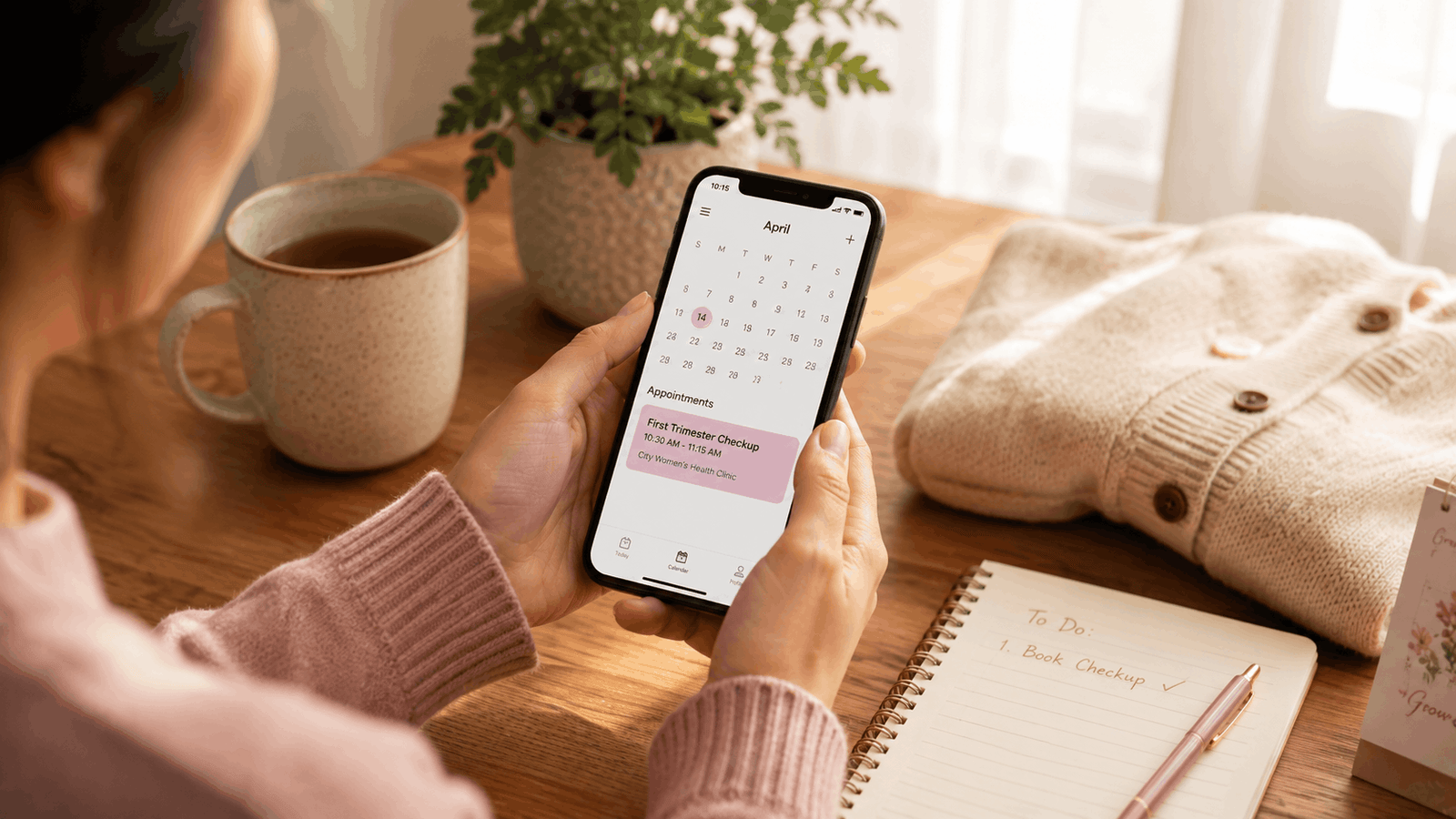
Ready to move past pregnancy week 1? Book your first trimester checkup today.
Most providers won’t see you for an official prenatal appointment until around week 8, once there’s enough to check on an ultrasound. Pregnancy week 1 itself doesn’t involve any exams, but don’t let that stop you from calling now.
If you’re actively trying to conceive or have a positive test on the way, go ahead and book your first trimester checkup as soon as you can. Reading through a comprehensive pregnancy care guide can also help you prepare questions on prenatal vitamins, medication safety, and what to expect over the next few months. It also gives you a chance to ask questions about prenatal vitamins, medication safety, and what to expect over the next few months.
📖 Complete Antenatal Roadmap
Want a full roadmap of your entire pregnancy?
Explore key milestones, trimester checkup schedules, and essential care tips in our complete guide:
Conclusion
Pregnancy week 1 may feel like an unusual place to start, but it marks the beginning of the timeline used to date your pregnancy. There is no baby yet, but your body is preparing for ovulation and possible conception in the weeks ahead.
If you’re trying to conceive, focus on the basics now: take folic acid, track your cycle, maintain healthy habits, and speak with your healthcare provider about any questions or medications.
As you move into week 2 and beyond, understanding what is happening at each stage can make the early pregnancy journey feel much easier to follow.

Ready to take the next step?
Book your first trimester checkup today to build a personalized care plan with your provider from day one.
Healthy Mother • Calm Mind • Healthy Baby
📍 Location: SA 6/168 Old RTO Office Chauraha, Sarnath, Ganapati Nagar, Ashapur Road, Pahariya, Sarnath-221007, Uttar Pradesh
📞 Contact: +91 96822 22121
✉️ Website: vedicpregnancy.com
🕒 Hours: Open 24 Hours
Frequently Asked Questions
Is it normal to have no symptoms at 1 week pregnant?
Yes. Since conception hasn’t happened yet at pregnancy week 1, there are no true pregnancy symptoms to notice. Whatever you’re feeling is tied to your period, not a pregnancy.
Can you test positive at 1 week pregnant?
No. A pregnancy test detects hCG, a hormone your body only produces after a fertilized egg implants, which usually happens around week 3 or 4. Testing during week 1 will not give an accurate result either way.
How big is the baby at 1 week of pregnancy?
There is no baby yet. At pregnancy week 1, your body is preparing an egg inside your ovary. Fertilization and the start of embryonic development happen later, usually around week 3.
Why does pregnancy start counting from my period if I’m not pregnant yet?
Because the first day of your last period is the easiest, most reliable date to track. Conception dates vary and are hard to know exactly, so doctors use LMP as a consistent starting point for the standard 40-week timeline.
What should I be doing at 1 week pregnant if I’m trying to conceive?
Start a prenatal vitamin with folic acid, track your ovulation window, limit alcohol, and consider booking a preconception or first trimester checkup so your provider can flag anything worth addressing early.
Pingback: Pregnancy Week 3: Key Symptoms, Baby Size & Next Steps
Pingback: Early Pregnancy Symptoms: 12 Clear Signs