
First Trimester Guide (Weeks 1-12): Symptoms, Care, Tests & Precautions
Medical Disclaimer
This content is for informational and educational purposes only and is not intended as medical advice. Always consult a qualified physician, obstetrician, or healthcare provider for any questions regarding your pregnancy or health conditions.
Finding out you’re pregnant can bring excitement, relief, worry, and a long list of questions. What should you eat? Which medicines are safe? When should you see a doctor? Is that cramp normal?
The first trimester of pregnancy covers weeks 1 through 12 and is a period of rapid development. It’s also when many people experience early pregnancy symptoms, schedule their first prenatal appointment, start folic acid, and learn which foods, medicines, activities, and exposures need extra attention.
You may feel different from one day to the next. One morning, the smell of coffee may suddenly be unbearable. A few days later, you may wonder why you feel almost normal again. Both experiences can happen.
This guide covers the first trimester of pregnancy week by week, including symptoms, care, food, tests, ultrasound, sleep, exercise, precautions, warning signs, and practical next steps.
✓
First Trimester of Pregnancy at a Glance
6 Key Insights
01
02
03
04
05
06
Book early prenatal care, take folic acid as recommended, review medicines with your healthcare professional, eat safely, stay hydrated, avoid alcohol and smoking, and learn the warning signs that need urgent care.
What is the first trimester of pregnancy?
The first trimester of pregnancy is generally counted as weeks 1 through 12. Pregnancy dating begins on the first day of your last menstrual period, so the first two weeks can occur before conception.
That dating system can feel confusing at first. You may be told you’re four weeks pregnant even though conception likely happened around two weeks earlier.
During the first trimester of pregnancy, development happens quickly. The neural tube develops into the brain and spinal cord, while other important structures begin forming. This is one reason early prenatal care and folic acid receive so much attention.
Your experience may look very different from someone else’s. Some people notice symptoms soon after conception, while others feel almost completely normal until after a missed period.
First trimester of pregnancy week by week
A first trimester of pregnancy week-by-week guide can help you understand what may happen without turning every week into a strict checklist. Your symptoms, appointments, and testing may not follow exactly the same timeline as another pregnancy.
Weeks 1 to 4
Weeks 1 and 2 are included in pregnancy dating even though conception generally has not happened yet. Around week 4, a missed period may be the first obvious clue that you could be pregnant.
Possible early signs include breast tenderness, tiredness, bloating, mild cramping, increased urination, changes in smell, and light spotting.
Some people notice none of these symptoms.
If a home pregnancy test is positive, contact your healthcare professional about starting prenatal care.
🌸 Explore Early Pregnancy Care
Just had a missed period or positive test?
Discover what’s happening at week 4, early symptoms, and baby’s size in our guide:
Pregnancy Week 4: Baby’s Size, Your Symptoms and What to Do →
Weeks 5 to 8
Early fetal development continues rapidly during these weeks. First trimester symptoms may become more noticeable, particularly nausea, vomiting, fatigue, breast tenderness, food aversions, constipation, frequent urination, and sensitivity to smells.
Your first prenatal appointment may include a review of your health history, previous pregnancies, medicines, supplements, family history, blood pressure, weight, blood tests, urine testing, and screening options.
Keep a list of your medicines, vitamins, supplements, allergies, previous pregnancies, and major health conditions on your phone. It’s much easier to hand over a complete list than try to remember everything during a busy appointment.
Weeks 9 to 12
By weeks 9 through 12, development continues at a rapid pace. You may still have nausea, vomiting, fatigue, headaches, constipation, or breast tenderness.
Some people start feeling better as they approach the second trimester. Others continue having symptoms beyond week 12.
There is no universal “normal” symptom pattern during the first trimester of pregnancy. Feeling exhausted one day and almost normal the next can happen.
What are common first trimester symptoms?

Small, nutrient-dense meals can help manage nausea and fatigue in early pregnancy.
Common first trimester symptoms include nausea, vomiting, fatigue, tender breasts, frequent urination, constipation, bloating, headaches, increased vaginal discharge, food aversions, and increased sensitivity to smells.
Many symptoms begin around weeks 4 to 6, although timing varies. Some pregnant people have several symptoms, while others have very few.
Hormonal changes contribute to many of these early changes. Your body is also adapting to the physical demands of pregnancy.
Symptoms alone cannot tell you whether a pregnancy is progressing normally. A change in nausea or breast tenderness, for example, should not be treated as a home test of pregnancy health.
First trimester symptoms before a missed period
First trimester symptoms before a missed period can include breast tenderness, fatigue, bloating, mild cramps, changes in smell, changes in appetite, and light spotting.
The difficult part is that these signs can also occur before a normal period. They cannot reliably confirm pregnancy by themselves.
A home pregnancy test is more useful around the time your period is due. Contact a healthcare professional if you have significant pain, heavy bleeding, fainting, or another concerning symptom.
First trimester care: what should you do?
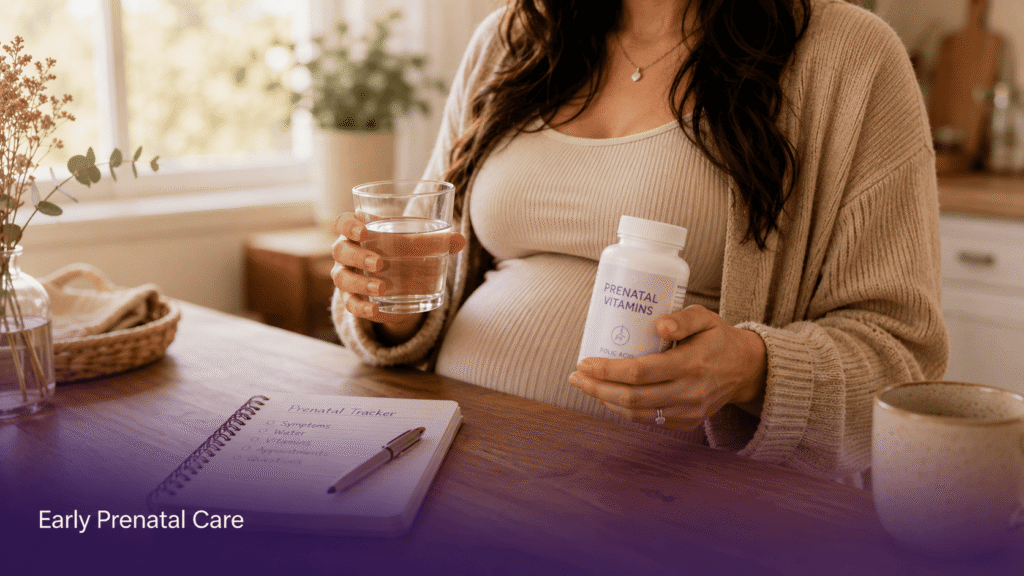
Booking early prenatal care and taking folic acid supports healthy early development.
First trimester care starts with early prenatal contact and a few practical health habits. You don’t need a complicated routine, but several choices deserve attention from the beginning.
1. Book an early pregnancy checkup
Arrange your first prenatal appointment after a positive pregnancy test.
Your healthcare professional may ask about your menstrual history, previous pregnancies, medical conditions, family history, medicines, supplements, allergies, and possible environmental exposures. Blood pressure, weight, blood tests, urine testing, and other assessments may also be part of the visit.
Bring a complete list of everything you take, including over-the-counter products and herbal supplements.
Don’t stop a prescribed medicine on your own. Ask the clinician who prescribed it or your prenatal care team how it should be managed during pregnancy.
2. Take folic acid as recommended
Folic acid is particularly important during the earliest weeks because it helps reduce the risk of neural tube defects.
The CDC recommends 400 micrograms of folic acid daily for women capable of becoming pregnant. Some people may need a different amount based on their individual medical history, so follow your healthcare professional’s advice if you have been given a specific recommendation.
Pregnancy also increases the recommended dietary intake for folate to 600 micrograms of dietary folate equivalents per day.
If you’re unsure whether your prenatal vitamin contains enough folic acid, take the bottle or label to your appointment.
3. Choose nutrient-rich foods
First trimester of pregnancy foods should include a mix of protein, vegetables, fruits, whole grains, dairy or fortified alternatives, beans, nuts, seeds, and healthy fats.
You don’t have to eat perfectly.
Nausea can make familiar foods difficult to tolerate. Smaller meals may be easier for some people, while simple foods can be useful on difficult days. Aim for variety when you can rather than feeling guilty about one meal that isn’t particularly nutritious.
Food safety matters too. During the first trimester of pregnancy, follow guidance on avoiding raw or undercooked foods, unpasteurized products, contaminated produce, and fish with high mercury levels.
4. Drink enough fluids
Nausea and vomiting can make hydration difficult.
Try taking smaller amounts of fluid regularly if large drinks make you feel worse. If you’re vomiting repeatedly and can’t keep fluids down, tell your healthcare professional.
Very little urine, significant dizziness, fainting, or unusual weakness can require medical attention.
5. Stay active when appropriate
For many people with healthy pregnancies, regular physical activity can remain part of the routine.
Walking, swimming, and other pregnancy-appropriate activities may be suitable. Your healthcare professional can recommend restrictions if you have bleeding, pain, pregnancy complications, or another medical concern.
Don’t begin a demanding new exercise program without discussing it with your healthcare team.
🌿 Holistic Pregnancy Care
Nurturing mind & body in month 1?
Explore Ayurvedic practices, daily rituals, and mantras designed for early fetal growth:
Which tests are done in the first trimester?
First trimester of pregnancy tests can include routine blood and urine testing, blood type and Rh testing, anemia screening, infection screening, and genetic screening.
The exact tests and timing depend on your medical history, pregnancy history, local practice, and the options available through your healthcare provider.
A simple breakdown can make the list easier to understand.
| Test or assessment | What it may check |
|---|---|
| Blood type and Rh factor | Identifies blood-group information that can affect pregnancy care |
| Complete blood count or hemoglobin | Checks for anemia and other blood findings |
| Urine testing | Looks for urinary and other health concerns |
| Infection screening | Checks for selected infections that can affect pregnancy |
| Ultrasound | Assesses pregnancy location, dating, development, or a clinical concern |
| Genetic screening | Estimates the chance of selected chromosomal or genetic conditions |
Screening and diagnostic tests are different. A screening result estimates the chance of a condition, while diagnostic testing can provide a more definitive answer for certain conditions.
Ask your clinician what each test can tell you, what it cannot tell you, and what your options are before making decisions about optional screening.
When is the first trimester ultrasound done?
A first trimester of pregnancy ultrasound may be offered to confirm pregnancy dating, assess development, or address symptoms or clinical concerns.
There isn’t one ultrasound schedule that applies to every pregnancy. Timing depends on why the scan is being performed and your healthcare provider’s approach.
First trimester screening can also involve an ultrasound and maternal blood testing. Following ACOG guidelines on prenatal screening and ultrasounds, first trimester screening is typically performed between 11 and 13 weeks for certain birth defects and chromosomal conditions.
Before a first trimester of pregnancy scan, ask what the ultrasound is checking. Knowing its purpose can make the report easier to understand afterward.
What should you avoid during the first trimester?
First trimester of pregnancy precautions focus on reducing known risks rather than trying to control every detail of daily life.
Some areas deserve particular attention, especially food safety, medicines, alcohol, smoking, recreational drugs, and harmful exposures.
| Avoid or limit | Safer approach |
|---|---|
| Alcohol | Avoid alcohol during pregnancy |
| Smoking | Avoid smoking and secondhand smoke when possible |
| Recreational drugs | Discuss any use with your healthcare professional |
| Unpasteurized foods | Choose pasteurized dairy and other safer products |
| Raw or undercooked foods | Cook meat, eggs, seafood, and shellfish properly |
| High-mercury fish | Choose lower-mercury fish according to pregnancy guidance |
| Unwashed produce | Wash produce thoroughly before eating |
| Unreviewed medicines or supplements | Check with your healthcare professional first |
| Harmful chemical exposures | Follow workplace and product safety instructions |
You don’t need to be frightened of normal daily activities. The goal of first trimester care is to reduce known risks and make informed choices.
No routine habit can guarantee prevention of miscarriage. Pregnancy complications can occur even when someone follows every recommendation correctly.
What is a safe sleeping position in the first trimester?
First trimester of pregnancy sleeping position usually isn’t a major restriction for an uncomplicated pregnancy.
Choose the position that feels comfortable and helps you sleep. Early pregnancy often comes with fatigue, so getting enough rest can be more useful than worrying about maintaining one specific sleeping position.
If lying flat makes you dizzy, short of breath, or uncomfortable, change position and discuss persistent symptoms with your healthcare professional.
As pregnancy progresses and your abdomen grows, side sleeping may become more comfortable. A pillow between the knees or under the abdomen can help.
What are danger signs of pregnancy in the first trimester?

Contact your healthcare provider promptly if you notice concerning symptoms.
Danger signs of pregnancy in the first trimester include heavy vaginal bleeding, severe or persistent abdominal or pelvic pain, fainting, severe dizziness, shoulder pain with bleeding or pain, fever, trouble breathing, chest pain, severe headache with vision changes, or vomiting that prevents you from keeping fluids down.
These symptoms shouldn’t be saved for your next routine prenatal visit.
Light spotting can occur in early pregnancy, but bleeding still deserves a call to your healthcare professional, particularly when it occurs with pain or other symptoms.
If you have severe pain, heavy bleeding, fainting, breathing difficulty, or another serious symptom, seek urgent medical care.
What are signs your pregnancy is going well in the first trimester?
Signs your pregnancy is going well in the first trimester are better assessed through prenatal evaluation than by tracking symptoms at home.
Your healthcare professional may use pregnancy dating, physical findings, blood tests, and ultrasound when indicated to assess pregnancy development.
Nausea can be strong, mild, or absent. Breast tenderness can come and go. Your energy may change dramatically from one day to another.
None of these symptoms alone can confirm that everything is progressing normally.
If you are worried because a symptom suddenly changed, contact your prenatal care team instead of trying to interpret the change yourself.
First trimester of pregnancy dos and don’ts
A simple checklist can make early pregnancy easier to manage. Use these practical dos and don’ts as a quick reference while following advice specific to your pregnancy.
| Do | Don’t |
|---|---|
| Book prenatal care early. | Drink alcohol. |
| Take folic acid as recommended. | Smoke or use recreational drugs. |
| Eat a varied, nutritious diet. | Start new supplements without checking first. |
| Follow food-safety guidance. | Eat raw or high-risk foods. |
| Review medicines and supplements with your healthcare professional. | Stop prescribed medication without medical advice. |
| Drink fluids regularly. | Ignore heavy bleeding or severe pain. |
| Stay physically active when medically appropriate. | Assume symptom changes can diagnose pregnancy health. |
| Keep a list of questions for prenatal appointments. | Ignore symptoms that feel severe or unusual. |
| Learn the warning signs that require urgent medical care. | Assume ordinary daily activities can guarantee prevention of miscarriage. |
Is the first trimester the hardest?
For many people, the first trimester can feel physically demanding. Nausea, vomiting, fatigue, breast tenderness, food aversions, frequent urination, and sleep changes can interfere with normal routines.
But there isn’t one hardest week for everyone.
Some people struggle most with nausea around the middle of the first trimester. Others have mild symptoms and find later pregnancy more difficult.
Sleep, work demands, existing health conditions, pregnancy complications, and individual symptom severity all affect the experience.
First, second, and third trimester comparisons
Pregnancy is divided into three broad stages, and each stage brings different priorities. The exact week boundaries can vary slightly depending on the source or clinical system.
| Pregnancy stage | Common week range | Main focus |
|---|---|---|
| First trimester | 1 to 12 | Early development, prenatal intake, initial testing, symptom management |
| Second trimester | 13 to 27 | Ongoing growth, anatomy assessment, prenatal monitoring |
| Third trimester | 28 onward | Growth, fetal movement, birth planning, closer monitoring |
The second trimester of pregnancy generally brings a shift toward ongoing monitoring and fetal growth. Your own symptoms may not change on a precise calendar date.
📖 Complete Antenatal Roadmap
Planning your entire 40-week journey?
Get an end-to-end breakdown of antenatal milestones and care tips across all trimesters:
First trimester of pregnancy: your practical checklist
If you’re in the first trimester of pregnancy, focus on the next useful step instead of trying to solve every pregnancy question at once.
Start with these actions:
- Arrange your prenatal appointment.
- Make a list of medicines and supplements.
- Check your folic acid intake.
- Review food-safety habits.
- Keep fluids available if nausea is bothering you.
- Write down symptoms and questions.
- Learn the urgent warning signs.
A note on your phone works well. Add appointment dates, symptoms, questions, medicines, and test results as you go.
Good first trimester care is practical. You don’t need to create a perfect routine overnight.
First trimester of pregnancy: what should you do this week?
The first trimester of pregnancy can feel easier when you break care into manageable tasks instead of trying to remember everything at once.
If you’ve recently received a positive pregnancy test, use this quick checklist:
- Schedule an early pregnancy checkup.
- Confirm your folic acid intake.
- Review all medicines and supplements.
- Check your usual foods for pregnancy safety.
- Keep water or other suitable fluids nearby.
- Note any symptoms that concern you.
- Save your prenatal team’s contact information.
- Learn which warning signs require urgent care.
Writing questions down before an appointment can be surprisingly helpful. Pregnancy information is everywhere, but your clinician can interpret it in the context of your own health.
Conclusion
The first trimester of pregnancy is a period of rapid development, physical changes, and plenty of questions. Good care starts with practical habits rather than trying to make every day perfect.
Early prenatal care, folic acid, safe food choices, medication review, appropriate physical activity, hydration, and awareness of warning signs provide a sensible foundation for the first 12 weeks.
Symptoms can change from one day to another. Having fewer symptoms does not automatically mean something is wrong, just as having strong symptoms does not guarantee that everything is progressing normally.
If you’ve recently received a positive pregnancy test, book your early pregnancy checkup so your healthcare professional can review your health, medications, testing options, and next steps.

Book Your First Trimester Checkup
Ready to start your care? Schedule an early antenatal visit to set your care timeline, review prenatal vitamins, and receive expert pregnancy care guidance.
Healthy Mother • Calm Mind • Healthy Baby
📍 Location: SA 6/168 Old RTO Office Chauraha, Sarnath, Ganapati Nagar, Ashapur Road, Pahariya, Sarnath-221007, Uttar Pradesh
📞 Contact: +91 96822 22121
✉️ Website: vedicpregnancy.com
🕒 Hours: Open 24 Hours
Frequently asked questions
Can you travel by plane during the first trimester?
Air travel is often possible during an uncomplicated pregnancy. If you have bleeding, significant pain, a high-risk pregnancy, or another concern, ask your prenatal clinician before traveling.
Can you have sex during the first trimester?
Many people can have sex during an uncomplicated pregnancy. Your healthcare professional may recommend avoiding intercourse if you have certain complications, bleeding, or another pregnancy-related concern.
Is it safe to color your hair during the first trimester?
If you’re concerned about salon chemicals or workplace exposure, discuss the specific products and exposure with your healthcare professional. Good ventilation and following product safety instructions are sensible precautions.
Can you get dental treatment during the first trimester?
Tell your dentist that you’re pregnant before treatment. Routine dental care may still be needed during pregnancy, and your dentist can coordinate with your prenatal clinician when medication or imaging is involved.
Can pregnancy cause a stuffy or blocked nose?
Yes. Hormonal changes can contribute to nasal congestion during pregnancy. If congestion is severe or you have trouble breathing, speak with your healthcare professional before using medication.
Is it normal to have more saliva during pregnancy?
Some pregnant people experience increased saliva production, particularly alongside nausea. If excessive saliva makes it difficult to eat, drink, or sleep, mention it at a prenatal appointment.
Can pregnancy make you feel unusually thirsty?
Increased thirst can occur for several reasons, including dehydration from vomiting. Persistent or excessive thirst, especially with frequent urination or other symptoms, should be discussed with your healthcare professional.
Can pregnancy affect your gums?
Hormonal changes can make gums more sensitive and prone to bleeding. Continue regular oral hygiene and tell your dentist that you’re pregnant.
Pingback: Frequent Urination During Pregnancy: 7 Safe Relief Tips